Introduction to Capture The Flag (CTF) - GDG Kuwait Workshop
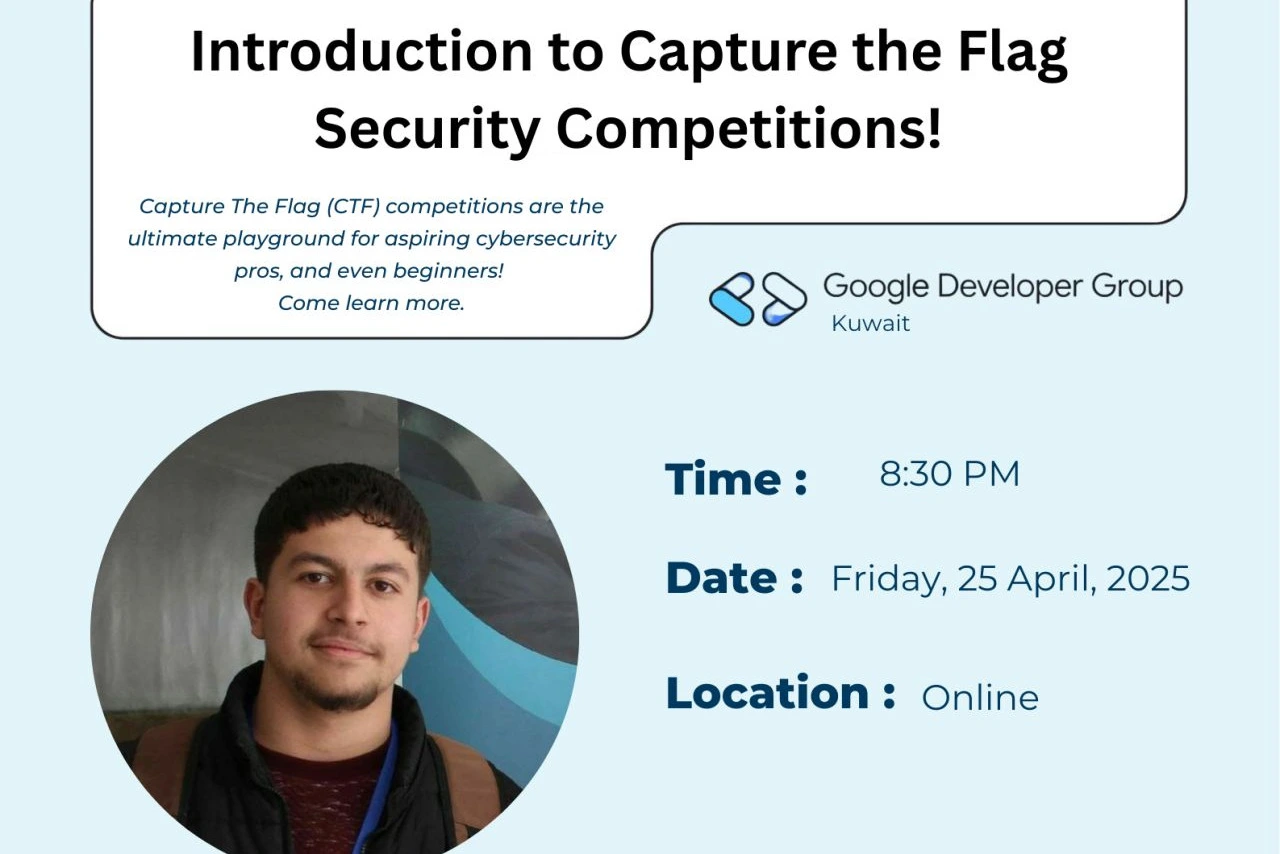
It was a pleasure delivering an introductory workshop on Capture the Flag (CTF) with GDG Kuwait! The session aimed to demystify the world of CTF competitions for newcomers, highlighting their role in sharpening cybersecurity skills.
Workshop Mission
The goal was simple but powerful: introduce beginners to CTF competitions, make cybersecurity accessible, and inspire continuous exploration in ethical hacking.
What is CTF?
We started by breaking down the fundamentals:
Competition Formats
- Jeopardy-Style: Challenge categories with increasing difficulty
- Attack-Defense: Real-time offensive and defensive operations
- Mixed Format: Combining multiple competition styles
- King of the Hill: Maintaining control of vulnerable systems
Why CTFs Matter
- Practical Learning: Hands-on experience beats theory
- Skill Development: Problem-solving, critical thinking, research
- Career Building: Direct path to cybersecurity careers
- Community: Global network of security enthusiasts
- Recognition: Showcase skills to employers
CTF Challenge Categories
We explored the fundamentals of various challenge types:
1. Reconnaissance (Recon)
- OSINT: Open-source intelligence gathering
- Steganography: Hidden information in images, audio, files
- Forensics: Analyzing artifacts and evidence
- Techniques: Metadata analysis, file carving, data recovery
2. Cryptography
- Classical Ciphers: Caesar, Vigenère, substitution
- Modern Cryptography: RSA, AES, hashing algorithms
- Encoding: Base64, hex, URL encoding
- Cryptanalysis: Breaking weak implementations
- Real-World: Understanding encryption in practice
3. Web Exploitation
- Client-Side: XSS, CSRF, clickjacking
- Server-Side: SQL injection, command injection, SSRF
- Authentication: Broken auth, session management
- Logic Flaws: Business logic vulnerabilities
- API Security: RESTful API vulnerabilities
4. Binary Exploitation
- Buffer Overflows: Stack and heap overflows
- Format Strings: Exploiting printf vulnerabilities
- Return-Oriented Programming (ROP): Advanced exploitation
- Reverse Engineering: Understanding compiled code
- Assembly: x86, x64 basics
5. Miscellaneous
- Programming Challenges: Automation and scripting
- Puzzle Solving: Logic and lateral thinking
- Networking: Packet analysis, protocols
- Linux: System administration and security
Hands-On Practice
Through live demonstrations and guided practice, participants explored beginner-friendly web recon and exploitation concepts:
Demo 1: Dorking
- Crafting effective search queries
- Identifying exposed content and misconfigurations
Demo 2: OSINT Basics
- Gathering public information responsibly
- Connecting open-source data to build context
Demo 3: Small Website Attacks (Intro)
- Common web flaws and how they happen
- Example: SQL injection on a simple demo site
Tools of the Trade
Participants learned essential CTF tools:
Analysis Tools
- file: Identify file types
- strings: Extract readable text
- binwalk: Analyze firmware and files
- exiftool: Read metadata
Web Tools
- Burp Suite: Web proxy and testing
- curl/wget: HTTP requests
- Browser DevTools: Inspect and modify
- SQLmap: Automated SQL injection
Crypto Tools
- CyberChef: Swiss army knife for crypto
- Python: Custom scripts
- hashcat/john: Password cracking
- OpenSSL: Crypto operations
Binary Tools
- ghidra/IDA: Reverse engineering
- gdb/pwndbg: Debugging
- radare2: Binary analysis
- pwntools: Exploit development
CTF Platforms for Practice
We discussed popular platforms for continuous learning:
- picoCTF: Beginner-friendly, educational
- HackTheBox: Realistic vulnerable machines
- TryHackMe: Guided learning paths
- OverTheWire: Terminal-based wargames
- CTFtime: Competition calendar and rankings
Methodology: How to Approach CTFs
1. Read Carefully
- Understand the challenge description
- Note hints and clues
- Identify the category
2. Enumerate
- Gather all available information
- Use reconnaissance tools
- Document findings
3. Research
- Google is your friend!
- Read documentation
- Check similar challenges
- Learn from writeups (after solving)
4. Try Basic Techniques First
- Start with simple solutions
- Test assumptions
- Iterate and refine
5. Don’t Give Up
- Take breaks when stuck
- Ask for hints (if available)
- Collaborate with team
- Learn from failures
Building a CTF Mindset
We discussed the mindset needed for success:
- Curiosity: Always ask “why?” and “how?”
- Persistence: Not giving up when stuck
- Creativity: Thinking outside the box
- Methodology: Systematic approach to problems
- Continuous Learning: Tech evolves, so must we
Career Paths
CTF skills open doors to:
- Penetration Tester: Finding vulnerabilities
- Security Researcher: Discovering new attacks
- Incident Responder: Handling breaches
- Malware Analyst: Reverse engineering threats
- Bug Bounty Hunter: Ethical hacking for rewards
- Security Engineer: Building secure systems
Workshop Impact
The session successfully:
- Demystified CTF competitions for beginners
- Provided hands-on experience with real challenges
- Sparked curiosity about cybersecurity
- Equipped participants with resources for self-learning
- Built confidence to participate in CTF competitions
Seeing newcomers successfully capture their first flags and the excitement in their eyes made this workshop incredibly rewarding!
Event Details:
- Place: GDG Kuwait - Online
- Date: April 25, 2025
- Format: Interactive workshop with live demos
- Attendees: 25+ participants from Kuwait and beyond
- Live Demos: Dorking, OSINT, and SQLi on a small demo site
- Platform: Instructor-led demos with safe, isolated examples
The goal was to not only provide practical knowledge but also to spark curiosity and encourage continuous exploration in the field of ethical hacking and cybersecurity.
Resources Shared
Learning Platforms
- picoCTF for beginners
- OverTheWire wargames
- HackTheBox Academy
Tools
- Kali Linux setup guide
- Essential tool repositories
- CTF toolkit recommendations
Communities
- CTFtime for competitions
- Discord servers for collaboration
- Reddit communities (r/securityCTF, r/netsec)
Learning Paths
- Roadmap to cybersecurity
- Certification paths (CEH, OSCP, etc.)
- Free courses and resources
Participant Feedback
“Finally understand what CTFs are about and how to get started!”
“The live demonstrations made everything clear. Can’t wait to try more challenges!”
“Never thought I could solve a cybersecurity challenge, but I did it!”
Thank you GDG Kuwait for this amazing opportunity to share the excitement of CTF competitions!